

CO₂ as a Ressource: Rohrdorfer Combines Capture and Conversion
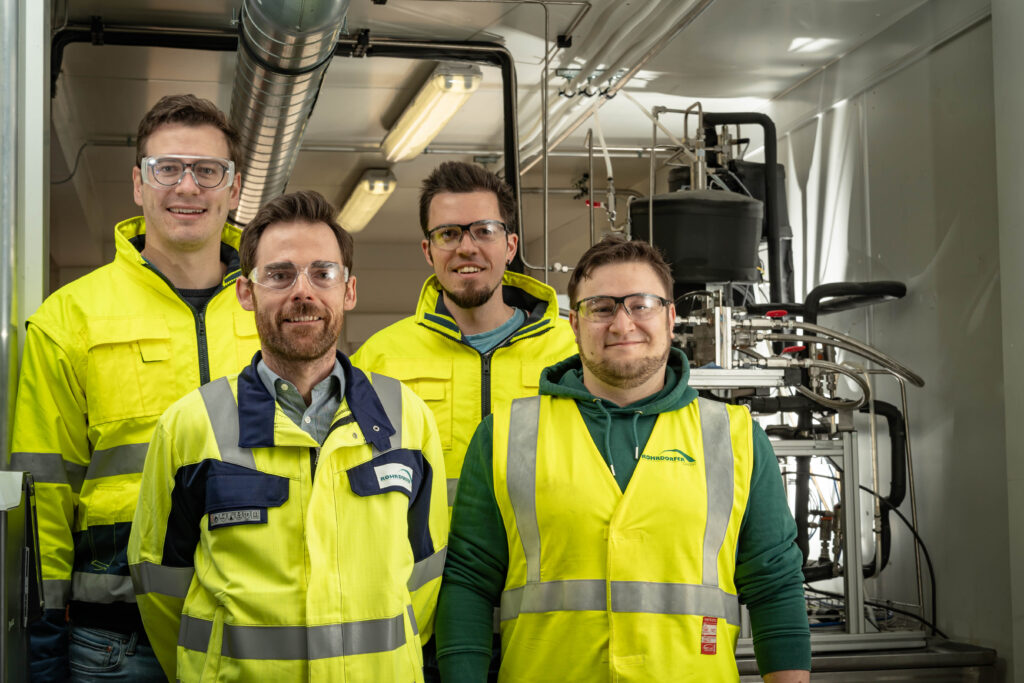
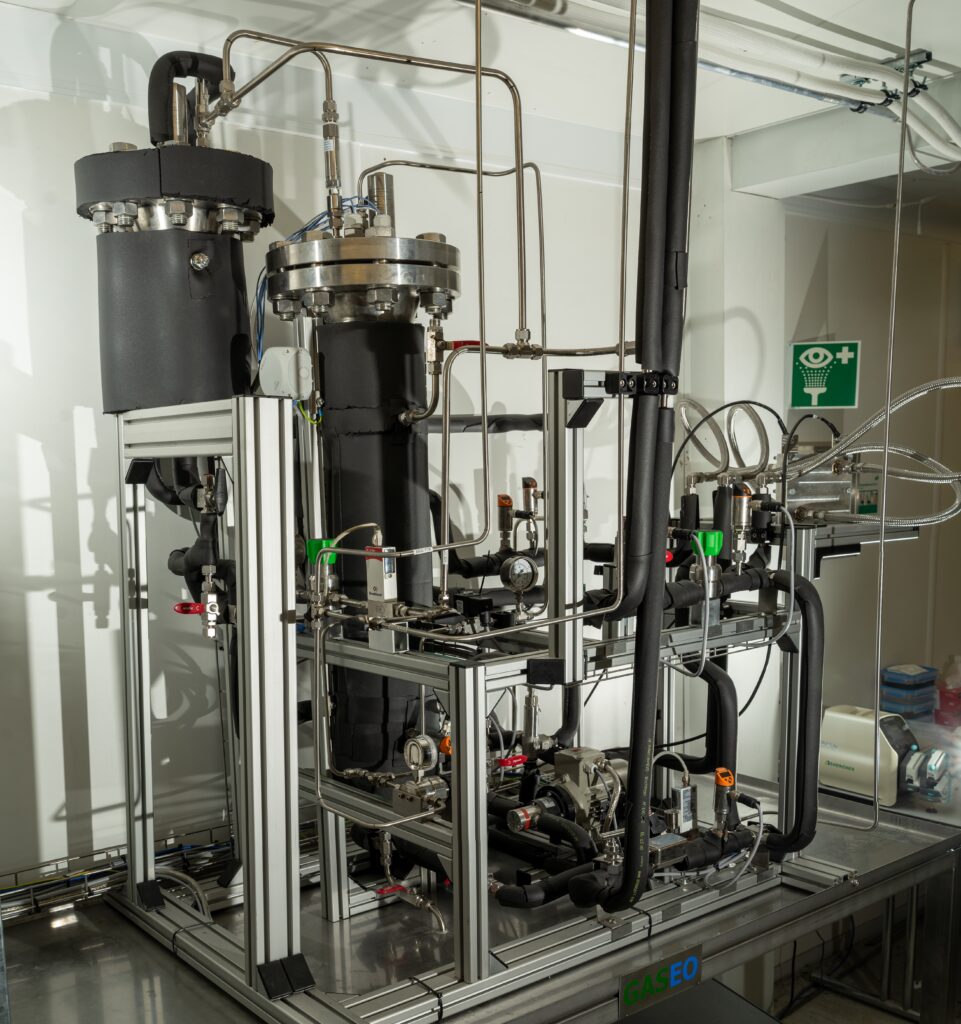
Rohrdorf, April 29, 2026 – The Rohrdorfer Net Zero Emission Team has developed a novel CCU (Carbon Capture and Utilization) technology that is particularly energy-efficient by combining capture and conversion into a single process step. This is achieved by utilizing the beneficial properties of electrolysis, as well as the waste heat generated during the process, for CO₂ desorption. The innovative process, with the working title iCCE (intensified Carbon Capture and Electrolysis), has been undergoing testing at Rohrdorfer since June 2025.
Production of synthesis gas for analytical purposes
The pilot plant, which was specifically designed for this purpose, utilizes an electrolyzer developed by Rohrdorfer, combined with proven amine scrubbing process steps. The result is a synthesis gas consisting of carbon monoxide and hydrogen. One potential application for this synthesis gas would be, for example, the reduction of pig iron to iron in iron production. Methanol or ethylene, key feedstocks for the chemical industry, could also be produced from it. The small quantities currently produced in Rohrdorf are used primarily for analytical purposes.
A Building Block for Decarbonization
CCU is a potential building block for achieving fully carbon-neutral cement production. Under the current EU Emissions Trading Scheme, companies are still required to purchase CO₂ allowances, even though these result in byproducts. As a result, CCU is not currently economically viable for companies. Rohrdorfer, however, is already investing in this technology to stay one step ahead for the future. The main focus, however, is currently on CO₂ avoidance. Up to 60 percent of CO₂ can be saved in cement production, for example by using low-clinker substitute raw materials or non-fossil fuels. This leaves 40 percent of unavoidable emissions resulting from the deacidification of the rock during clinker burning. The Rohrdorfer Net Zero Emission team is testing various processes to capture these residual emissions and convert them into a base product for the chemical industry.
Targeted infrastructure expansion is a prerequisite
“We are currently testing several capture methods in parallel so that we can make an informed decision on which one to use for an industrial-scale plant,” says Dr. Christopher Ehrenberg, Technical Director of the Cement Division. “We are concerned about the slow expansion of infrastructure for CO₂ transport and the consistent supply of green electricity. Both are essential for us if we are to achieve the EU’s climate targets. We believe the federal and state governments have a duty to drive this expansion forward more decisively.”